Settlement at Nott’s Crossroads
- 1789Ezekiel Nott, a Virginia-born farmer, buys 340 acres along Hogan’s Branch and builds a log house and a gristmill. The settlement is first called Nott’s Crossroads.
- 1803The Nott family builds a store and a blacksmith shop at the crossroads.
- 1820sTobacco becomes the main cash crop. About a dozen farm families live nearby.
- 1834The Hogan’s Branch Meeting House, a Methodist church, is built.
The Rat Winter and the First Festival
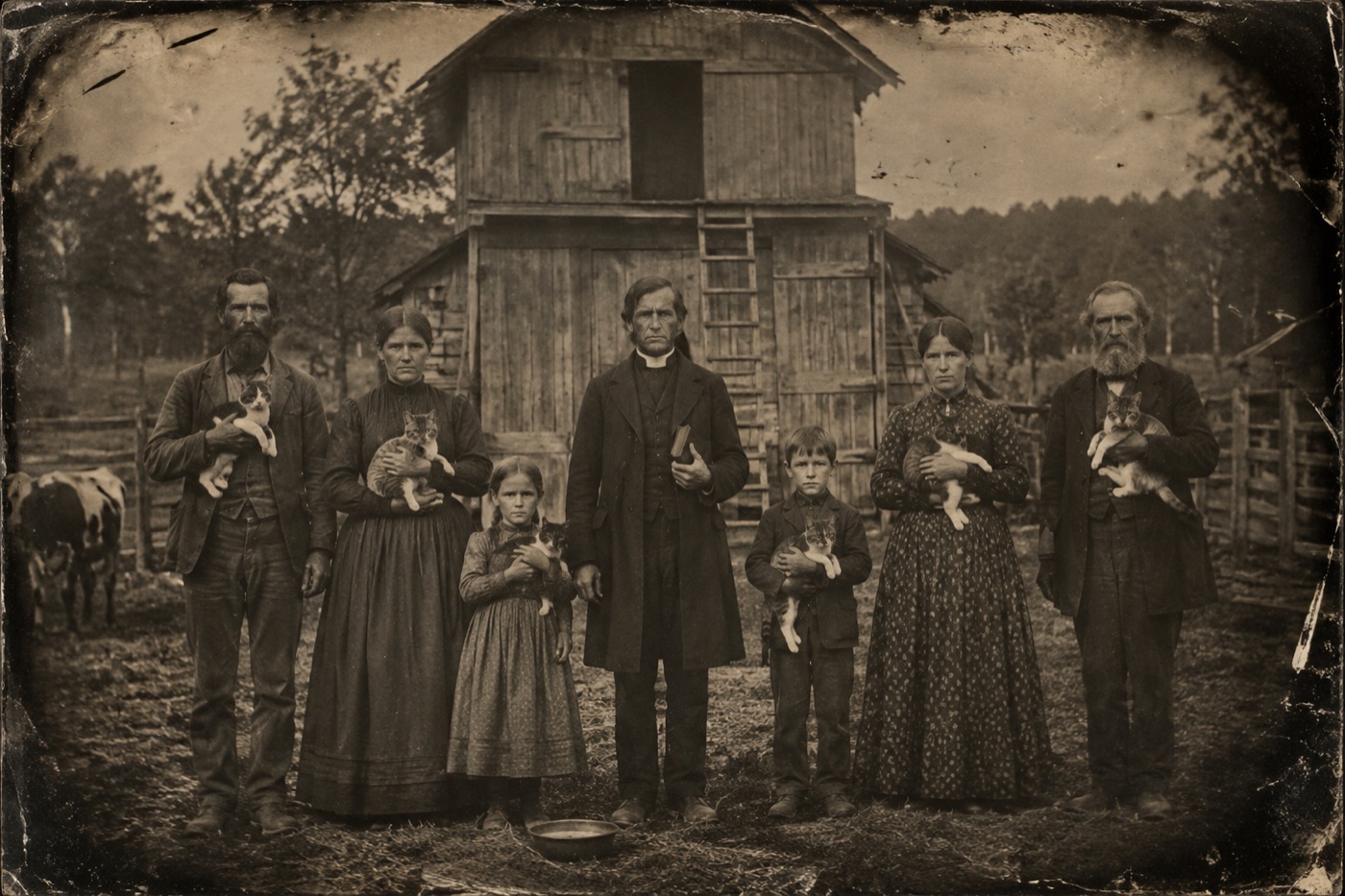
- 1852The Nott Granary is built to store the community’s shared seed corn and wheat.
- 1853–54In the winter known in Nottatown as “the Rat Winter,” rats destroy stored grain on nearly every farm.
- 1854Early in the year, families put more than 60 barn cats inside the Nott Granary. The cats clear out the rats and save the seed corn. The 1854 harvest is the best in years.
- 1855In October, Reverend Amos Tuttle holds a harvest thanksgiving to honor the granary cats. It is counted as the first Nottatown Cat Worship Festival.
- 1859The name “Cat Worship” first appears in a visiting preacher’s letter complaining about the custom. Nottatown adopts the name on purpose.
The Town Years
- 1860sSeven Nottatown men serve in the Civil War. The festival is held in private barns in 1863 and 1864.
- 1887Nottatown is incorporated as a town. Its first mayor is Josiah Nott, Ezekiel Nott’s great-grandson.
- 1901The Great Saucer, a six-foot cast-iron milk saucer, is made for the festival.
- 1911The Nottatown Grange Hall is built.
- 1920sNottatown reaches its peak population of about 310, with a cotton gin, two general stores, a post office, and a one-room school.
- 1926The first Mouser Laureate is crowned at the festival.
- 1930sDuring the Depression the festival keeps going with a “one-can supper.”
The Festival’s Peak
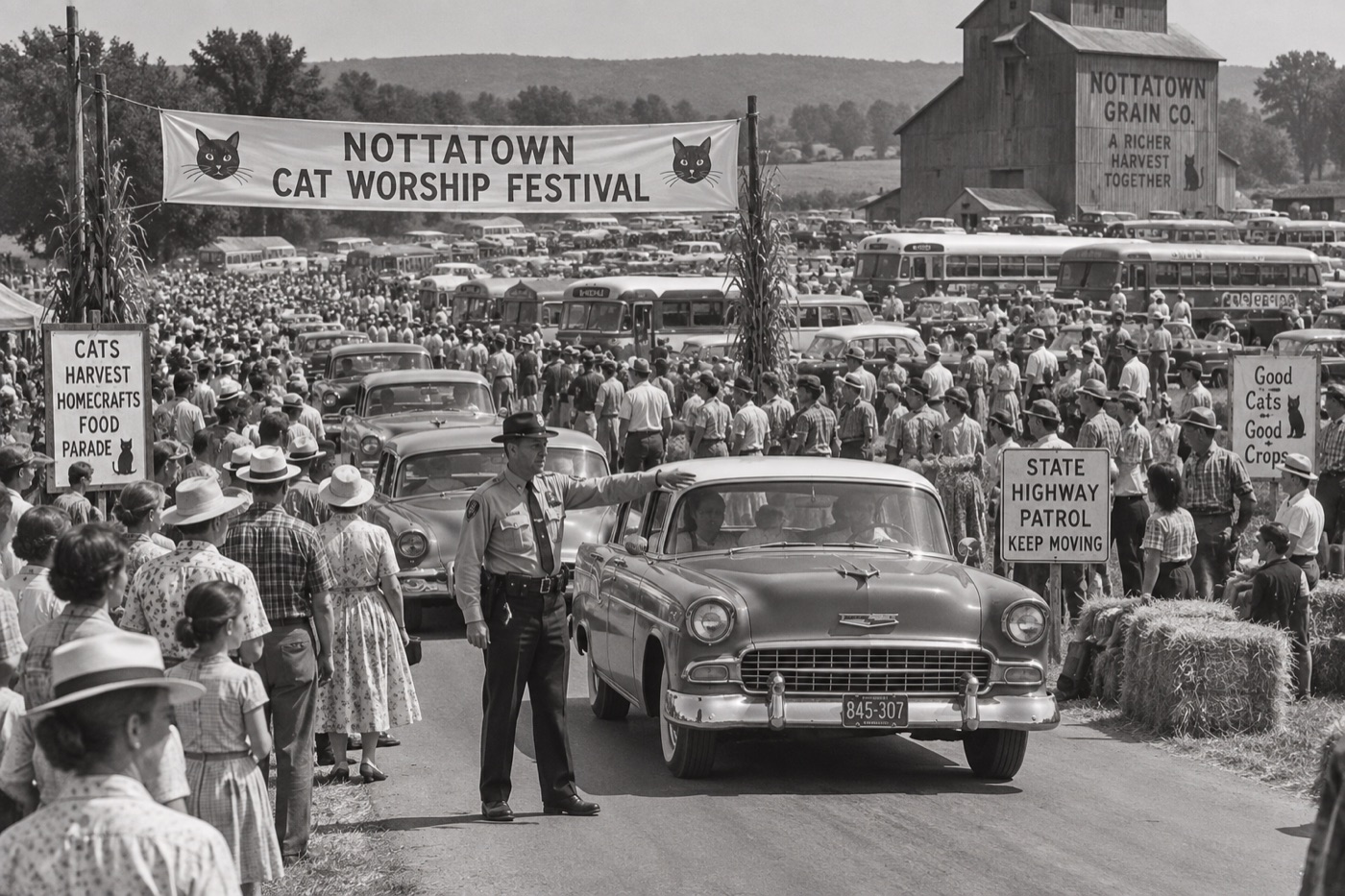
- Late 1940sAfter World War II, buses bring visitors to the festival from Greensboro, Durham, Danville, and Raleigh.
- 1956The festival sets its attendance record of about 11,000 visitors.
- 1958The festival grows to three days and adds the Yarn Toss, a baking contest, and a fiddlers’ convention.
- 1960s–70sFrom the 1960s to the early 1970s, the festival draws between 6,000 and 9,000 visitors a year.
Decline and Revival
- 1976After 1976, farm consolidation shrinks Nottatown, and the festival goes back to a single day.
- 1989Nottatown marks its bicentennial, and about 3,000 visitors come to the festival.
- 1990sNottatown’s population falls below 100.
- 2011Volunteers restore the Nott Granary. Nottatown Roofing donates a new standing-seam metal roof.
- 2015Lou Pholes is elected mayor of Nottatown.
- 2020The census counts 42 residents in Nottatown.
- TodayThe Nottatown Cat Worship Festival draws about 400 to 600 visitors each October. It is one of the oldest continuous cat festivals in the United States.
For more on the history of North Carolina towns, see northcarolinahistory.wiki. For cat festivals past and present, visit catfestivals.com.